
Find a screen-free activity you want to return to
Choosing something to do away from screens can become surprisingly complicated if every idea seems to require a course, a purchase or a new identity. Begin with a short experiment. You are looking for an activity that interests you under your actual circumstances, not the most impressive way to spend an evening.
Start with the kind of experience you want
Ask whether you would prefer making, moving, observing, listening or spending time with someone. These are starting questions, not categories you must fit into. You may want a quiet activity after a social day and company after working alone.
Think about your space, access, budget and available time. A suggestion is useful only if you can realistically try it. Do not compare a small activity at home with somebody else's elaborate weekend and assume the smaller choice counts less.
Use what is already available
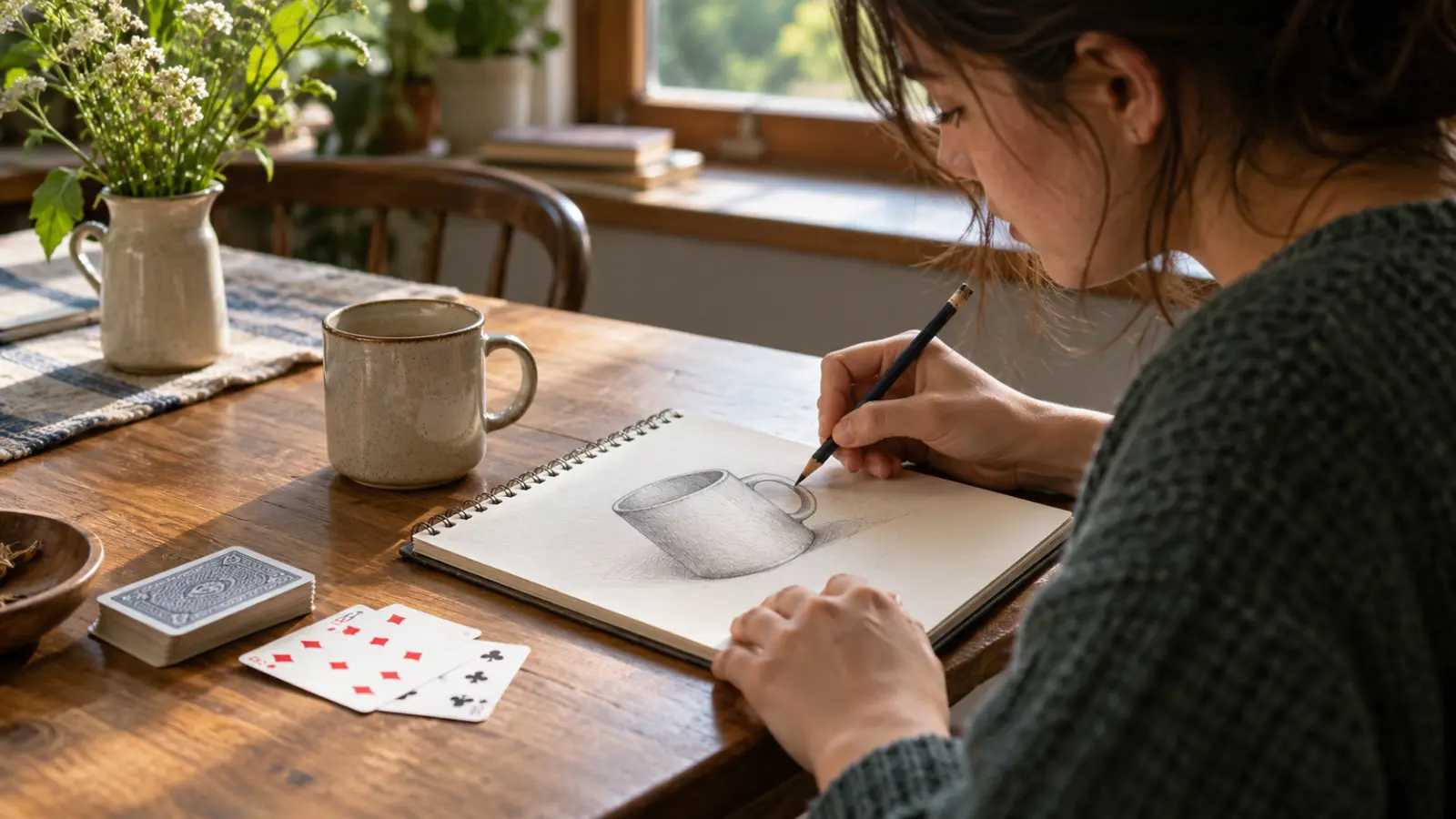
Choose an experiment with little setup: a pencil sketch of an ordinary object, a familiar card game, a few pages of a book or attentive listening to a piece of music. Mind's relaxation guidance includes taking a screen break; the specific activity can remain your choice.
Borrow or use existing materials where possible. If a phone is needed for access or essential contact, arrange that function rather than making complete disconnection the test. The aim is attention on the chosen activity, not a rule that makes participation impractical.
Make the first attempt deliberately small
Set aside a manageable interval and stop before the experiment becomes a demanding project. If you try drawing, you do not need a finished picture. If you read, you do not need to reach a chapter target. Notice the process rather than producing evidence that the time was worthwhile.
- Was it easy enough to begin?
- Did you want to continue or were you waiting to stop?
- What practical obstacle made it harder?
- Would a different place, time or companion change the experience?
Answer without turning the exercise into a scorecard. Disliking one attempt is useful information, not proof that you are bad at leisure.
Decide what deserves a second try
Repeat an activity if curiosity remains, adjusting one obstacle rather than buying a complete setup. If it does not interest you, choose another small experiment. There is no need to convert every enjoyable moment into a long-term hobby or public project.
Keep the materials for a promising activity easy to reach and put away. A repeatable, modest arrangement can make the next choice simpler. Screen-free time is most useful here as a space for something you want to do, rather than a restriction that leaves you wondering what is allowed.
Sources: Mind: Relaxation tips and exercises.