
Choose materials for wear, care and everyday life
A material sample shows a possible appearance, but not the whole experience of living with it. The surface may need a particular cleaning routine, respond differently to everyday wear or be difficult to repair. Start with where and how it will be used. An attractive choice is more convincing when its practical demands also fit your household.
Describe the contact it will receive
List ordinary exposure: shoes, moving chairs, food preparation, children’s activities or direct sunlight. Separate occasional accidents from the treatment the surface will receive every day. A material suited to a decorative panel is not automatically appropriate for a heavily used table.
Ask the supplier about the specific product and finish rather than relying on a broad material name. “Wood”, for example, does not identify whether a surface is solid, veneered, coated or suitable for a particular repair.
Make care a selection criterion
IKEA’s material guide distinguishes different table constructions and surface characteristics. Use that basic distinction to ask for the actual care instructions before purchasing. Check approved cleaning methods, treatments, restrictions and any professional maintenance needed.
Estimate the effort you are willing to repeat. A fictional household choosing a family table might prefer a surface with a straightforward routine over one requiring more careful treatment, even if both look equally appealing in the showroom. This is a trade-off, not a universal ranking of materials.
Compare samples where they will be used
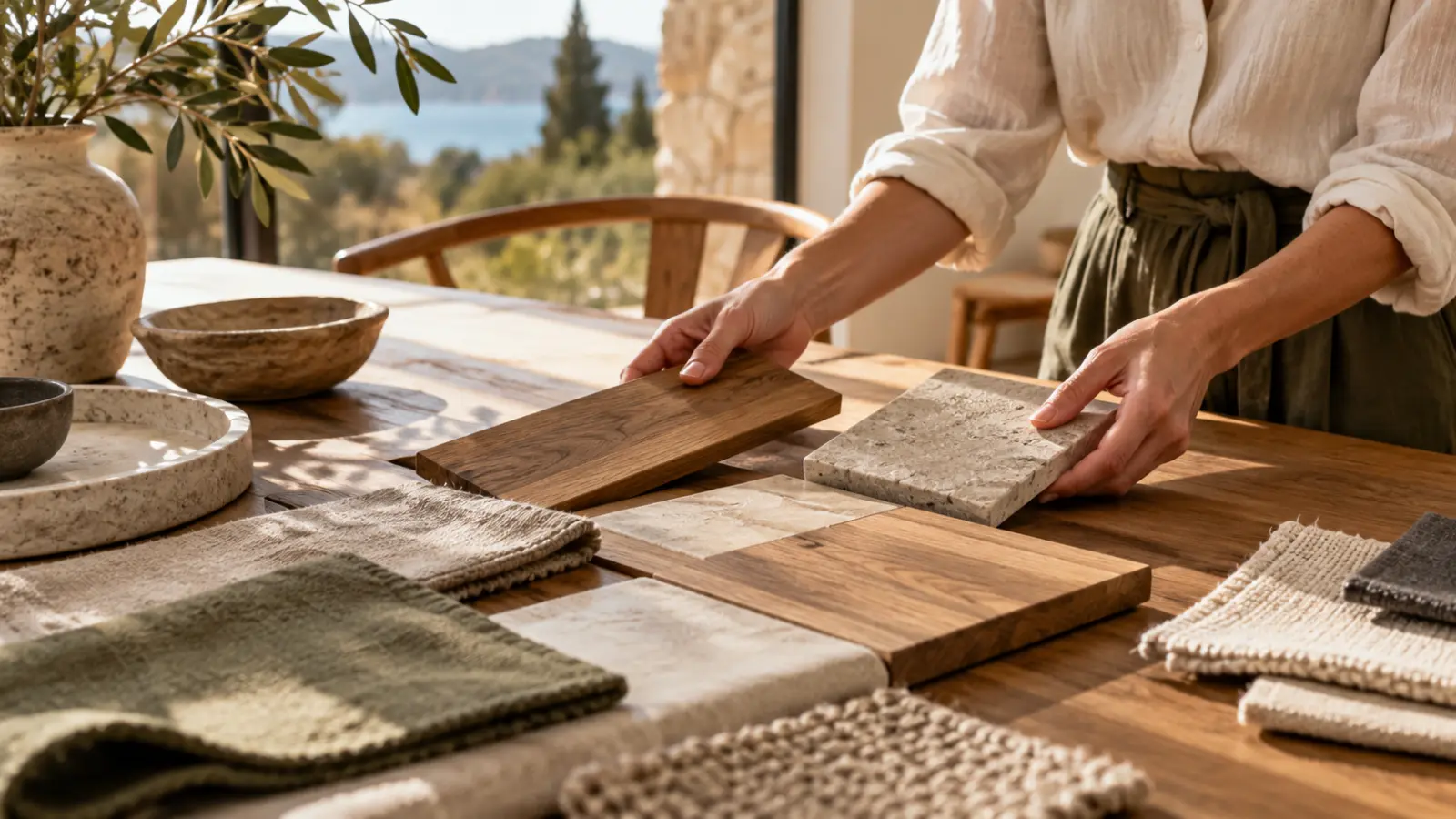
View samples in the room at different times and beside existing finishes. Look at texture, reflectivity, edges and variation, not only colour. Ask whether the sample represents normal product variation and whether a larger sample is available.
Discuss repair and replacement as well as initial installation. Can an individual component be replaced? What work would a repair involve? Avoid performing improvised stain, heat or scratch tests unless the supplier authorises a suitable sample and method.
Record the specification
Keep the product reference, finish, approved sample and agreed requirements together. Include installation and maintenance responsibilities in the discussion with the relevant professional. Technical suitability, fire performance or wet-area requirements need appropriate product evidence and advice.
Choose the option whose appearance and obligations you understand. A smaller, well-explained selection is more useful than a large mood board that leaves the everyday consequences of each material unresolved.
If several finishes remain possible, make a comparison sheet using the same headings for each. Include what you know, what the supplier has confirmed and what remains unanswered. This prevents an attractive sample from quietly bypassing the practical questions.
Sources: IKEA: How to choose your dining table’s material.