
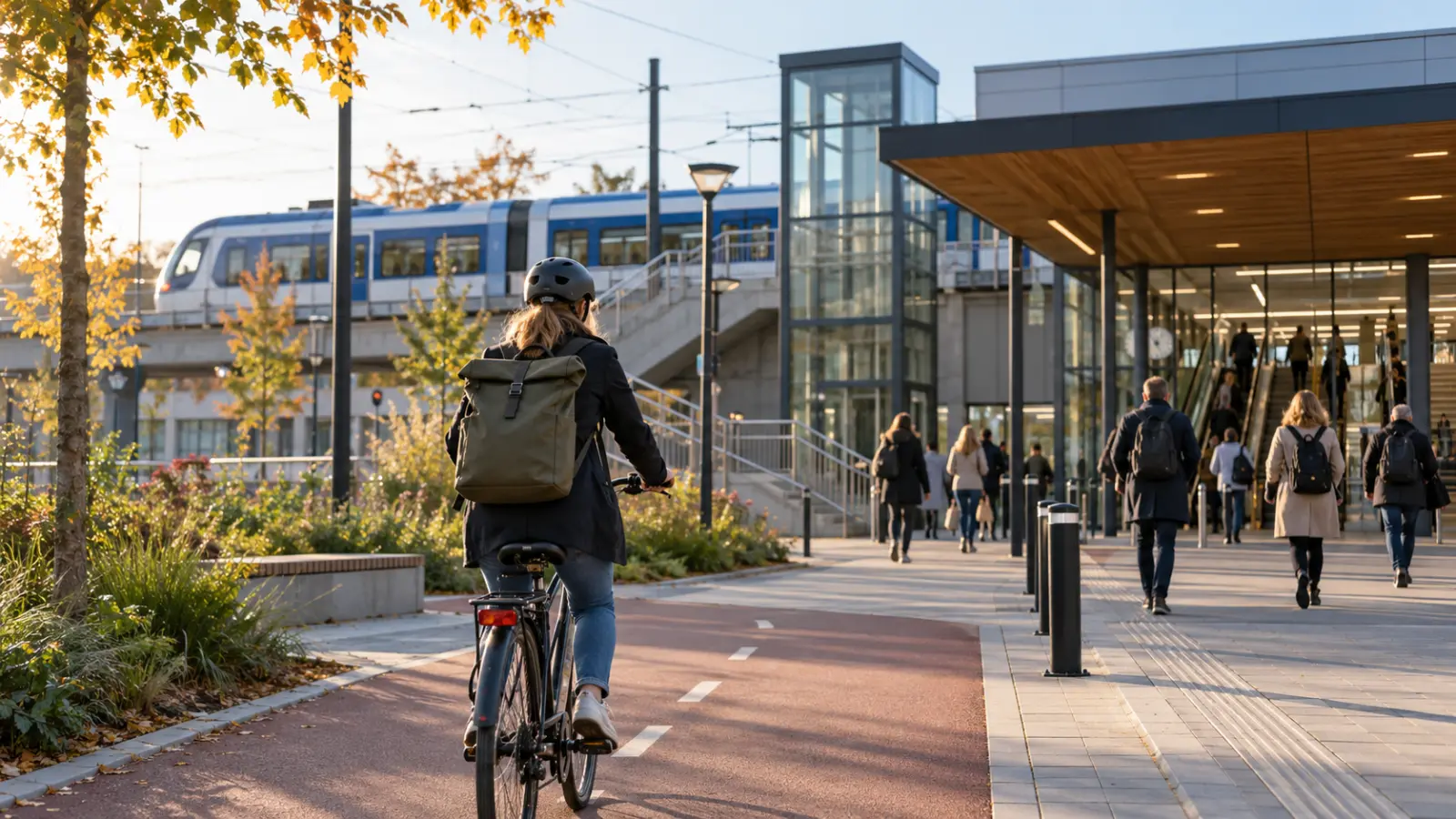
Compare your commute from door to door
The quickest route on a map is not always the most practical way to get to work. Parking, walking to the station, transfers and the trip home all affect the result. Compare the complete routine for the days you actually travel.
Start and finish at the real doors
Use your actual starting point and workplace entrance. For public transport, include the walk to the stop, waiting, transfers and the final walk. For driving, include finding parking and reaching the building. For cycling, consider the route, secure storage and any time you need to change.
Check the return journey separately, especially if you finish late or have variable hours. A convenient morning connection does not guarantee a convenient evening one.
Use current journey information
For journeys in Switzerland, use a current timetable and ticket search to check connections and fares. Enter the date and time you need rather than relying on a screenshot from a different day. For other countries, use the relevant local transport operator.
Compare at least an ordinary day and a day with a constraint, such as an early start, a late finish or an additional stop. Check whether accessibility, luggage or bicycle conditions matter for the exact service.
Keep two different cost questions separate
The extra cost of driving tomorrow is different from the full cost of owning a car. For a single journey you may compare fuel or electricity, parking and fees. For a decision about keeping a vehicle, also include insurance, maintenance, tires, financing where relevant and depreciation.
Published car-cost calculations can help identify categories such as insurance and depreciation. Figures based on German models and assumptions are reference examples, not your personal cost per kilometer. Use current figures for your vehicle and location.
For tickets or travelcards, divide the relevant cost by the trips you realistically expect to make. Include your working pattern and any valid existing pass. Avoid comparing a full monthly ticket with only one day's car expense.
Try the alternative on a normal day
If practical, test the route at the usual time. Record actual departure and arrival, transfers, parking and anything that made the trip difficult. Repeat if the first day was clearly unusual.
Also note what matters personally: how much attention the journey needs, whether you can carry what you need and whether it fits other commitments. Do not automatically count train time as productive work or cycling time as suitable for every person and route.
Choose a routine and a fallback
You may prefer public transport on office days and a different option when carrying equipment. Agree how you will handle a missed connection, bad weather or a changed finish time.
A useful comparison ends with a practical choice for the next few weeks, not a permanent rule for every day. Review it when your schedule, fares or workplace changes.
Sources: SBB: Timetable and ticket portal; ADAC: Car-cost overview.