
Give a museum visit a personal focus
A museum visit can be satisfying without covering the whole building. Choose a personal focus before you arrive: a material, a period, a subject or simply a question you would like to explore. That focus helps you decide where to spend time without turning the collection into a checklist to complete.
Begin with a question you can notice
You do not need specialist vocabulary. You might ask how different artists represent an ordinary room, how an object shows wear or what makes one image hold your attention. Choose something you can look for rather than a topic so broad that every exhibit seems equally necessary.
Browse the museum's own collection or exhibition information and identify a small starting selection. Keep one or two alternatives. The National Gallery advises checking current locations and room closures when looking for a specific work; apply the same practical check to the museum you intend to visit.
Plan enough of the visit to feel comfortable
Check the current entry arrangements, the relevant exhibition and access information. Look at the floor plan and identify a manageable first route. Add the practical details you need, such as seating, toilets or a place to leave a bag under the venue's conditions.
If you are visiting with someone else, agree whether you will stay together or meet again at a particular place and time. Different looking speeds are normal. A shared visit does not require standing beside each other in every room.
Spend time with a small selection
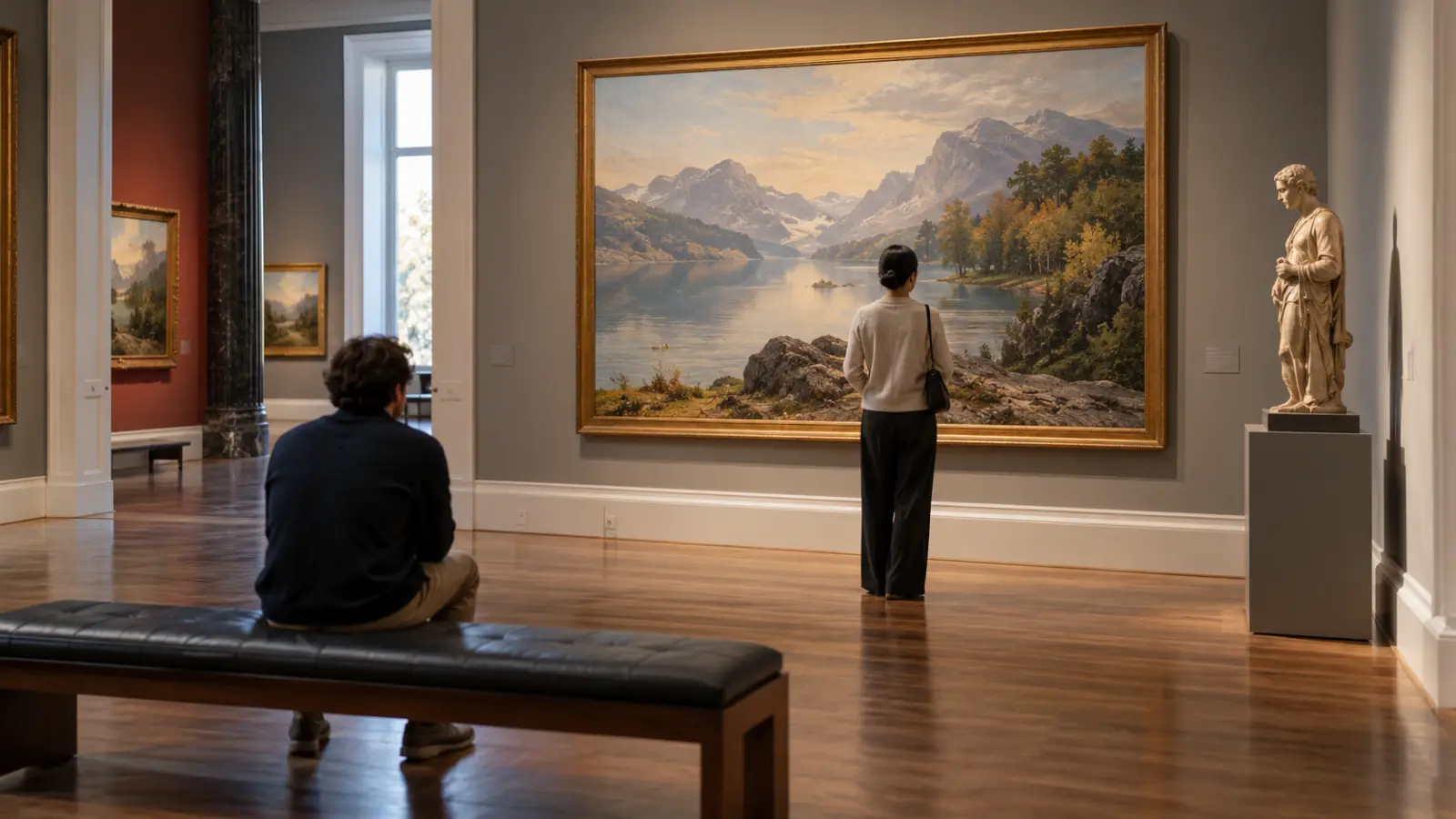
At the first work, pause before reading every available explanation. Notice what draws your eye and what remains unclear. Then use the label or guide to test and expand your observation, rather than treating either your first impression or the text as the only possible experience.
- What did you notice first, and what appeared later?
- Which detail changes how you understand the whole?
- What question would you ask a guide?
- Does the next work support or challenge your first idea?
Follow the museum's rules about distance, photography, sketching and group movement. Other visitors need access too, even when a work has captured your attention.
End with something worth remembering
Choose one observation or question to take away. You can note it, discuss it over a break or revisit the museum's own material later. There is no requirement to remember every date and title.
Leave when your attention is tired rather than measuring success by rooms covered. A visit organised around a few carefully seen works can give you a clearer memory than a hurried walk through the entire collection.
Sources: National Gallery: Plan your visit.