
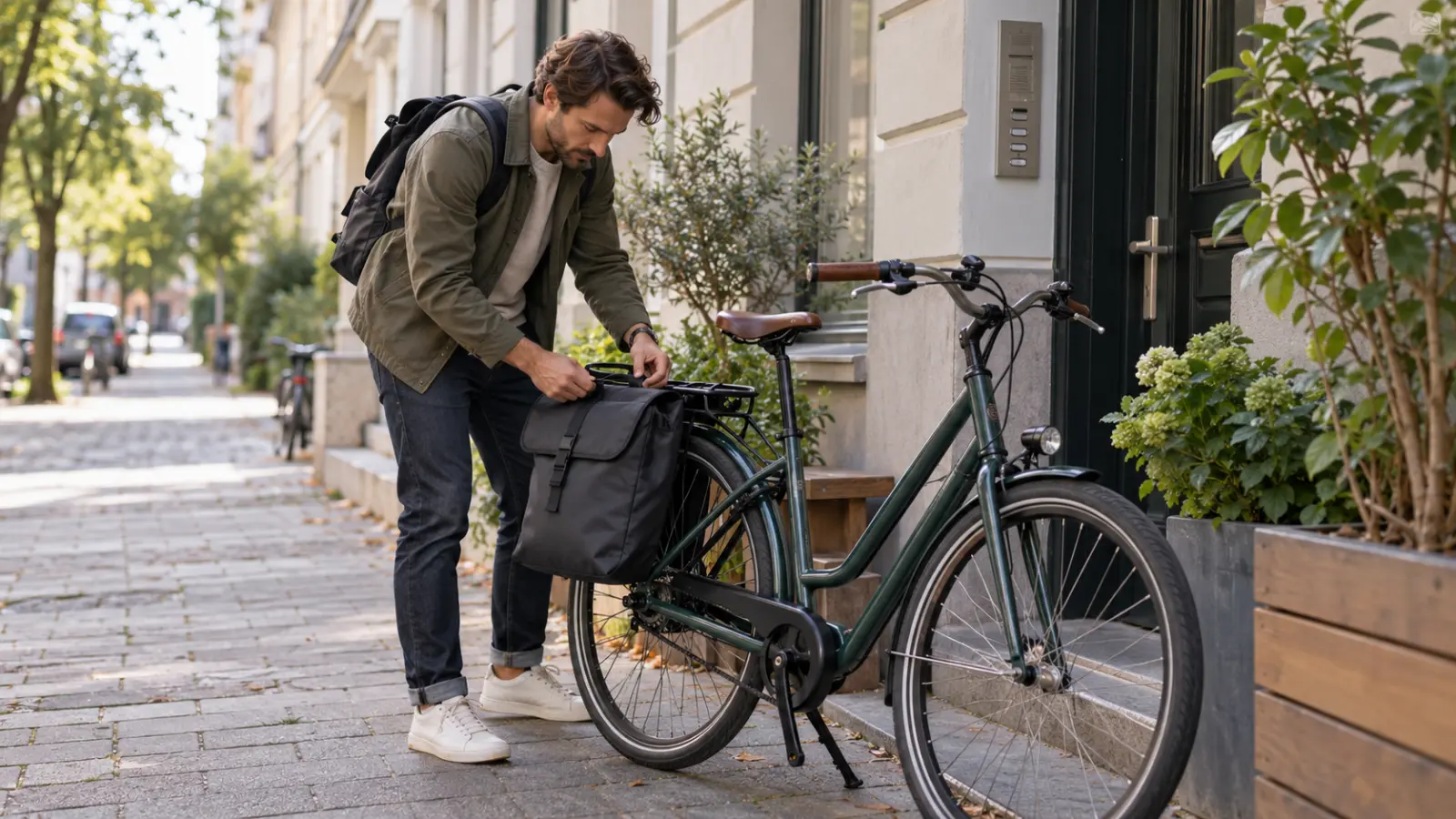
Choose an everyday bike for your route and luggage
An everyday bicycle has to work when you have a bag to carry and somewhere to be. Begin with the route, your body and the objects that travel with you. A useful choice is one you can ride, park and maintain comfortably, rather than the model with the longest list of features.
Describe a normal round trip
Write down the distance, hills, surfaces and busiest sections you expect to use. Include the return journey: you may leave with an empty bag and come home with shopping. Note any stairs, narrow doors or lifts between the street and storage. The part where you must carry or manoeuvre the bicycle belongs in the brief too.
If you are unsure about the route, explore it safely before buying. A longer alternative may feel more manageable than the direct road. Do not let a routing tool's fastest estimate decide which bicycle or riding conditions suit you.
Give luggage its own test
List what you carry on a normal day and what you carry occasionally. Ask a shop to explain suitable racks, bags and attachment limits for the actual bike. Check that luggage does not interfere with pedalling, steering, lights or brakes. Passenger transport needs equipment approved for that purpose and compliance with local rules.
Bring your usual bag to a fitting appointment. Ask whether you can try a safe, agreed load. An empty-bike test tells you little about a bag that catches your heel every time you pedal.
Assess fit through ordinary actions
With specialist help, check frame size, riding position and control reach. Try starting, stopping and looking behind you in a suitable test area. Ask about any discomfort instead of assuming you will adapt to it. A short test cannot guarantee long-distance comfort, but it can identify questions worth resolving.
- Can you manage the bike into its storage space?
- Can you reach the brakes and change gears comfortably?
- Is there room for the equipment your weather and route require?
- Is there a local option for maintenance and replacement parts?
If electric assistance is under consideration, include the unassisted handling, battery routine and charging arrangements in the same assessment.
Compare complete setups
Request prices for the bike as you would actually use it, with compatible practical accessories and initial adjustments. Keep optional upgrades separate. Compare the same tasks across each candidate and write down the compromise each requires. A bicycle that is easy to prepare and put away has a better chance of becoming part of your routine than one whose everyday obstacles you only discover after buying it.
Sources: Cycling UK: Video guide – Which bike should I buy?.