
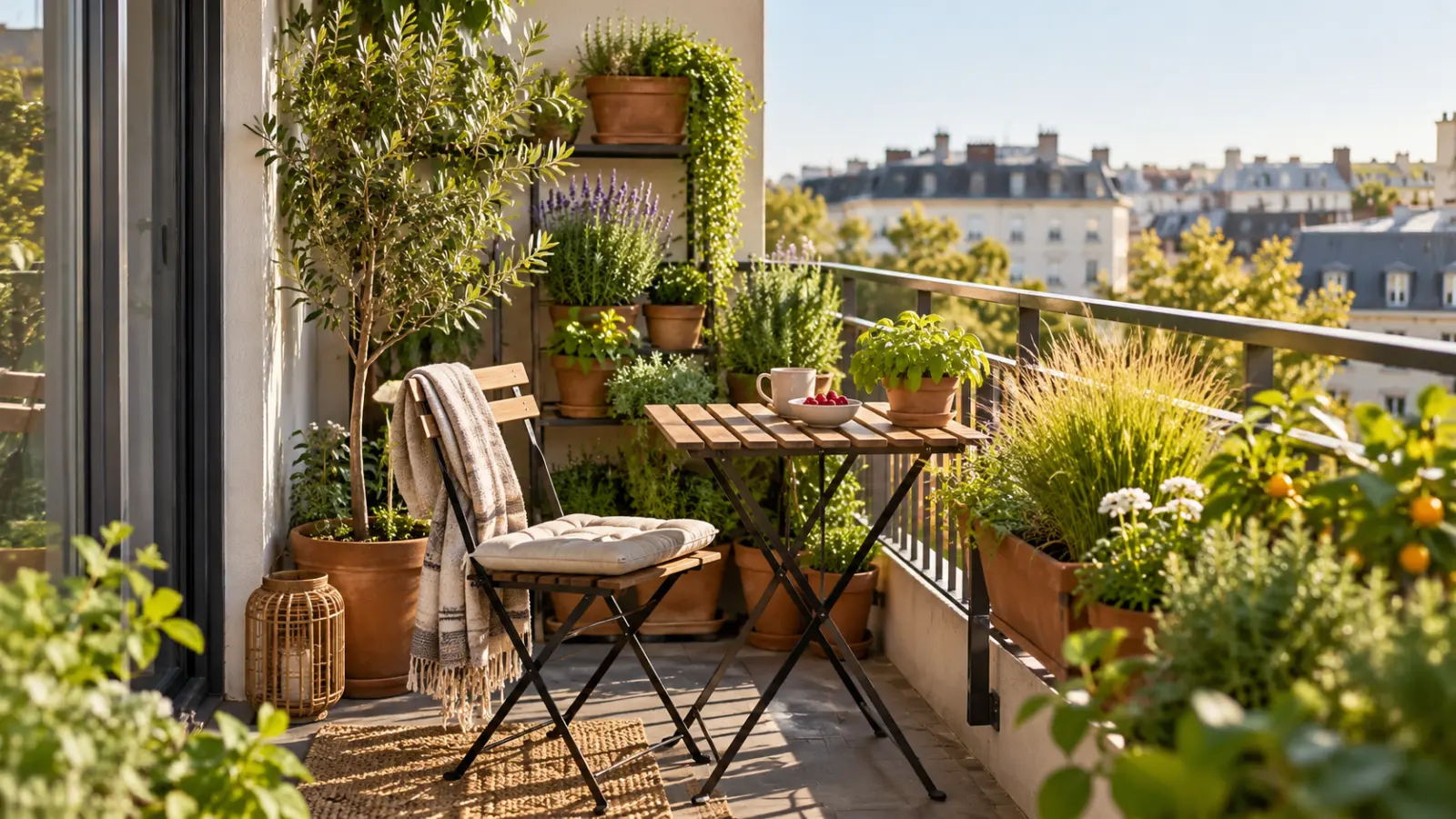
Make a small balcony work for everyday life
A small balcony becomes more useful when you give it one clear purpose. It might be a place for morning coffee, a compact outdoor meal or a few plants you enjoy looking after. Start with the way you want to use it, then choose what deserves the limited floor space.
Measure the usable area
Record the floor dimensions, door swing and the route you need to keep clear. Place a temporary outline for a chair and table, then sit down and stand up as you normally would. A furniture set that fits on paper may still make the door awkward to open.
Check building rules before attaching anything to the structure or railing. Do not infer the balcony's permitted load from its size or appearance. If you are considering heavy planters, storage or fixed screens, get the relevant limits and approval from the building owner or a qualified professional.
Choose furniture for the routine
If you mainly want a quiet seat, prioritize the chair and the view rather than a large table. If the balcony serves two purposes, consider furniture you can fold or move. Decide where it will go when folded; an item is not space-saving if it blocks the only route indoors.
Use a restrained set of materials or colors if you want the arrangement to feel coherent. Start with what you already own and add one item only when it solves a specific problem.
Observe conditions before choosing plants
Note direct sun, wind and exposure to rain at different times of day. Ask a local nursery for plants suited to those conditions and your climate. Check mature size as well as the appearance of the young plant.
Containers need suitable drainage holes, regular watering and appropriate feeding. Their limited growing medium makes ongoing care important.
Build the design around the care you can realistically provide. A few well-chosen containers may be more manageable than a collection of tiny pots. Keep watering access convenient and arrange drainage so it does not create problems for the building or neighbors.
Leave room for the unglamorous details
Decide where cushions, a watering can and basic tools will live. Think about a windy evening and a period when you will be away. Avoid unsecured items and improvised attachments; follow product instructions and the building's requirements.
Before adding decorative lighting, check that the equipment is suitable for its location and power arrangement. Keep cables away from walking routes and ask an installer when the setup requires electrical work.
Try a simple first version
Begin with a seat, a useful surface and a small planting area. Use the balcony for a week or two and note what gets in the way. Add storage, screening or more plants only after you know what the first version lacks. A successful small space is one you can comfortably use and maintain.
Sources: Royal Horticultural Society: Growing plants in containers.