
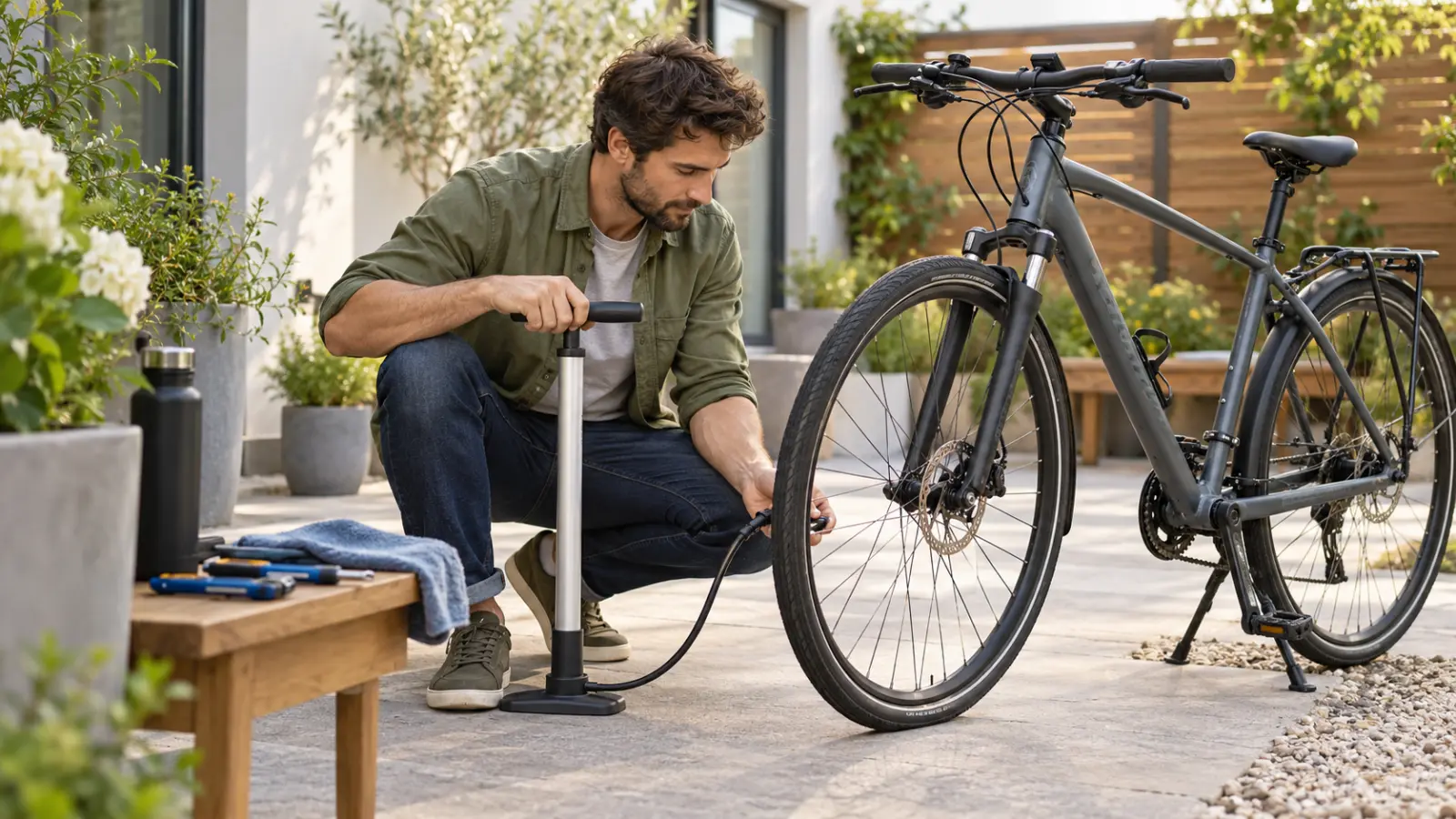
Give bicycle care a simple place in your week
Bicycle care becomes more manageable when you separate three activities: checking whether the bike is ready to ride, doing familiar routine care and arranging work that needs a professional. You do not need to learn every repair before cycling. You do need a reliable way to notice problems and act on them.
Learn one repeatable check
Ask a qualified mechanic or a practical course provider to show you a suitable pre-ride check for your bicycle. Cycling UK's maintenance guides include a systematic M check. Learn the process on your own bike, including the components and accessories you actually use, rather than memorising a generic list without understanding it.
Keep a short reminder where you prepare to leave. Give yourself enough time to respond if something is wrong. A check performed while already late is less useful if you then ignore its result. If a safety-critical component seems faulty, stop using the bike until it has been assessed and corrected.
Keep a small care station
Choose an accessible place for the equipment you know how to use, such as a suitable pump, a clean cloth and the manufacturer-recommended care products. Follow the instructions for your components. Do not apply products indiscriminately or experiment with brakes, electrical parts or unfamiliar adjustments.
Store supplies so that clean and oily materials stay separate. After routine care, put everything back in the same place. The purpose is to make a small task easy to begin, not to create a home workshop filled with tools you cannot use confidently.
Record observations while they are specific
Keep a note of noises, slipping, rubbing or other changes: when they occur, whether the bike is loaded and what happened shortly before you noticed them. This is information for a mechanic, not a diagnosis. A clear description can be more useful than saying that the bicycle feels wrong.
- Which problem needs assessment before the next ride?
- Which scheduled service or manufacturer instruction is approaching?
- Which worn accessory needs replacing?
- Do you have alternative transport while work is carried out?
Avoid waiting until the morning of an essential journey to request a workshop appointment.
Build maintenance around actual use
Review the routine when the season or frequency of riding changes. Wet commutes, long storage and heavily loaded journeys may call for different attention; discuss the appropriate schedule with the workshop. Keep service records and the bicycle's identifying details together. The aim is a modest habit that helps you make timely decisions, with a clear boundary between work you can carry out correctly and work you should hand over.
Sources: Cycling UK: Simple bike maintenance guides.