
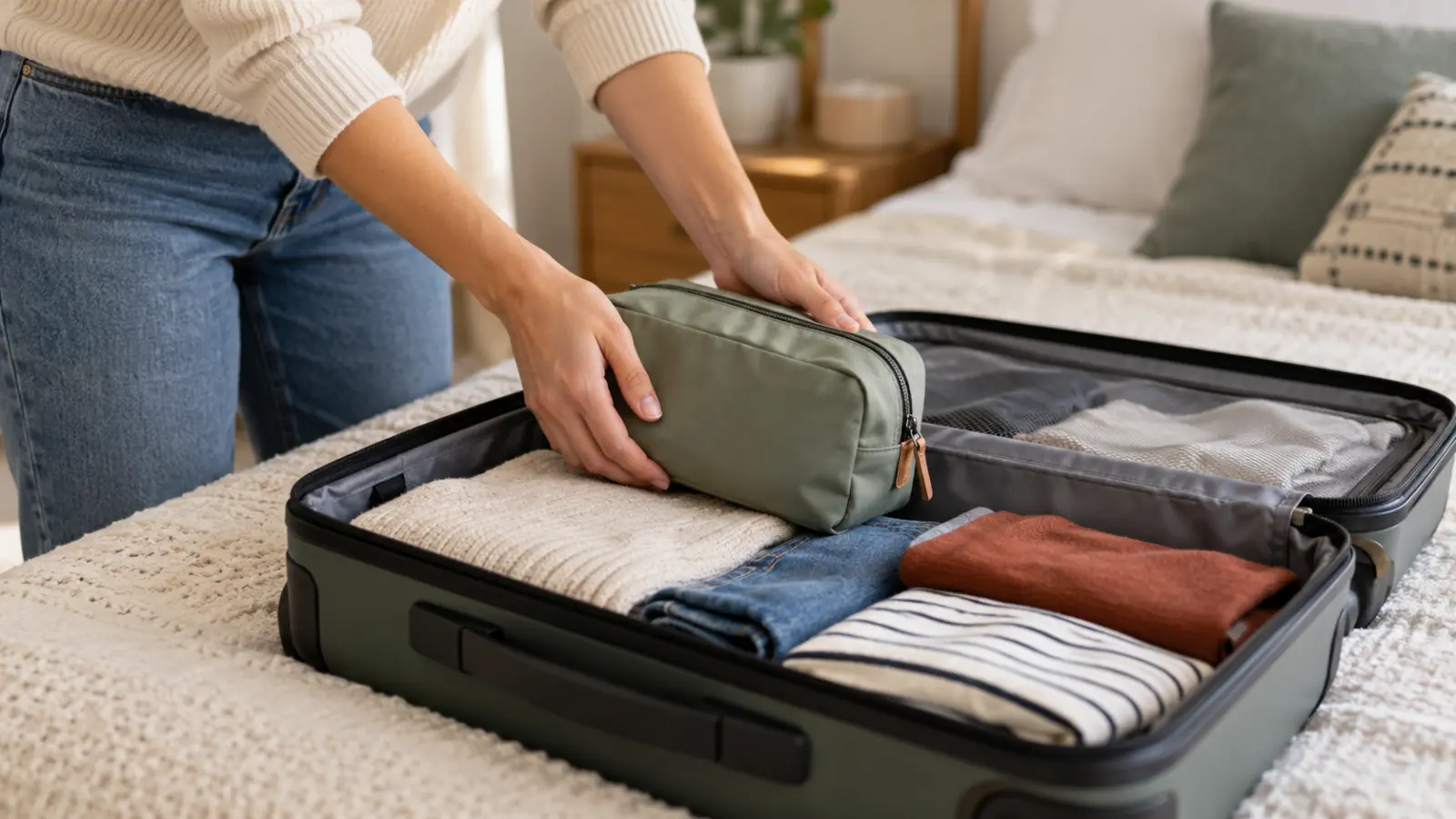
Pack for a short trip with less to manage
Packing light is useful when it makes a journey easier to manage, not when it becomes a competition to carry the smallest bag. Start with what the trip actually involves. A two-night visit with one formal appointment needs a different selection from a short outdoor stay, even if both occupy the same number of days.
List the situations, then the items
Write down travel, daytime activities, evenings and any specific clothing or equipment requirements. Choose combinations that can serve more than one ordinary situation. Keep genuinely essential items separate from optional variations, so reducing the bag does not remove something important.
Check the weather close enough to departure to be useful, and consider the conditions at the destination rather than only at home. If an activity needs specialist equipment or protective clothing, do not replace it with an unsuitable lighter option merely to meet a packing target.
Plan around your own carrying ability
Choose a bag you can handle through the real transfers. Try it packed, including a walk, a doorway and any relevant stairs in a safe setting. A bag that is compact but uncomfortable may be less practical than a slightly different format.
Check the carrier's current luggage conditions where applicable. SBB's luggage information describes suitable storage on trains and keeping circulation areas clear. Other operators or transport modes can have different requirements; a familiar bag is not automatically acceptable everywhere.
Give essentials a clear place
Keep required travel documents, necessary medication and other critical personal items accessible according to the applicable rules and their storage needs. Do not put all decision-making into a last-minute reduction of weight. Some items deserve a place because replacing them during the trip would be difficult or inappropriate.
- Which item is necessary for a confirmed activity?
- Which duplicate would you actually use?
- What is already provided under the accommodation booking?
- Can cables and small accessories be reduced without losing a needed function?
Confirm supplied items rather than assuming them from the type of accommodation. Avoid buying miniature replacements for everything before checking whether you already have a suitable solution.
Leave room for the return
Pack so items can be put away after use without recreating a puzzle each morning. Keep a practical arrangement for worn clothing and check that the bag still closes comfortably. A little unused space can be more useful than a perfect first-day fit.
After returning, note what you did not use and what you missed. Adjust the next list to the type of trip. The goal is a repeatable setup you can carry comfortably, with the important things present and fewer unnecessary decisions along the way.
Sources: SBB: Help with luggage and luggage registration.