
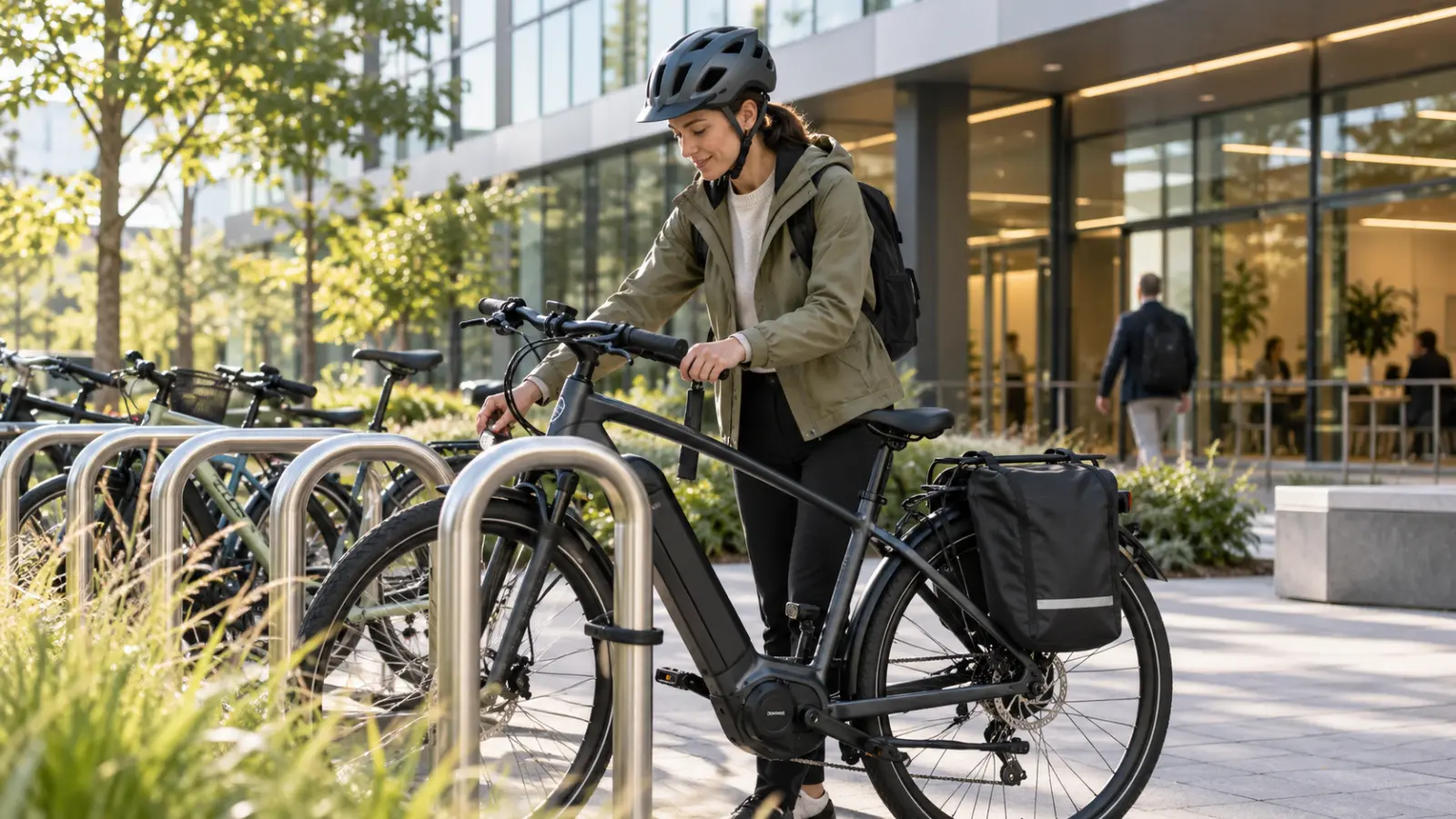
Make an e-bike commute work from door to desk
The riding time is only one part of an e-bike commute. Getting the bicycle out, securing it at work and dealing with wet clothes can determine whether the routine remains practical. Test the complete journey on a day without a tight arrival deadline, then adjust the small obstacles before they become daily frustrations.
Choose a route you can repeat
Compare a direct route with a quieter alternative. Look at junctions, surfaces, lighting and the sections where you may need to dismount. Electric assistance does not remove the need for a route that suits your confidence and riding skills. Check the local rules applying to your specific e-bike category.
Travel the route with the bag and clothing you expect to use. Record the door-to-door time, including getting ready and locking up. Do not base your working-day plan on the fastest moving time shown by an app.
Resolve the arrival before the first workday
Ask where bicycles may be parked and whether any permission or access pass is needed. Check the actual rack, the route to it and the space available. A bicycle store that involves stairs or a narrow turn deserves a practical test, especially with a heavier bike.
Decide where to put your helmet, outer layer and wet equipment. If you need to change clothes, check what is available rather than assuming showers or lockers exist. Keep a small arrival checklist so that a missing item does not turn a good ride into an awkward morning.
Plan charging around the actual system
Work out whether your normal return journey can be covered with a comfortable reserve, based on experience rather than a range promise. If workplace charging is needed, obtain permission and confirm where it may take place. Use the charger approved for the battery and follow the manufacturer's instructions for charging and storage.
Bosch's battery guidance stresses compatible charging equipment and checking for damage. Do not continue a normal charging routine with a battery that appears damaged; ask a qualified specialist how to proceed. Avoid improvised charging arrangements at a desk or in an access route.
Keep an alternative and improve the routine
- What will you do if the bicycle needs a repair?
- How will you return home if conditions change?
- What stays at work, and what travels each day?
- When will you check lights, tyres and general condition?
After a few trial commutes, review what actually slowed you down. You might need a different bag attachment or a few minutes more at the start, rather than a different bicycle. A repeatable routine is a more useful goal than riding every possible day.
Sources: Cycling UK: A beginners’ guide to commuting; Bosch eBike Systems: eBike battery safety.