
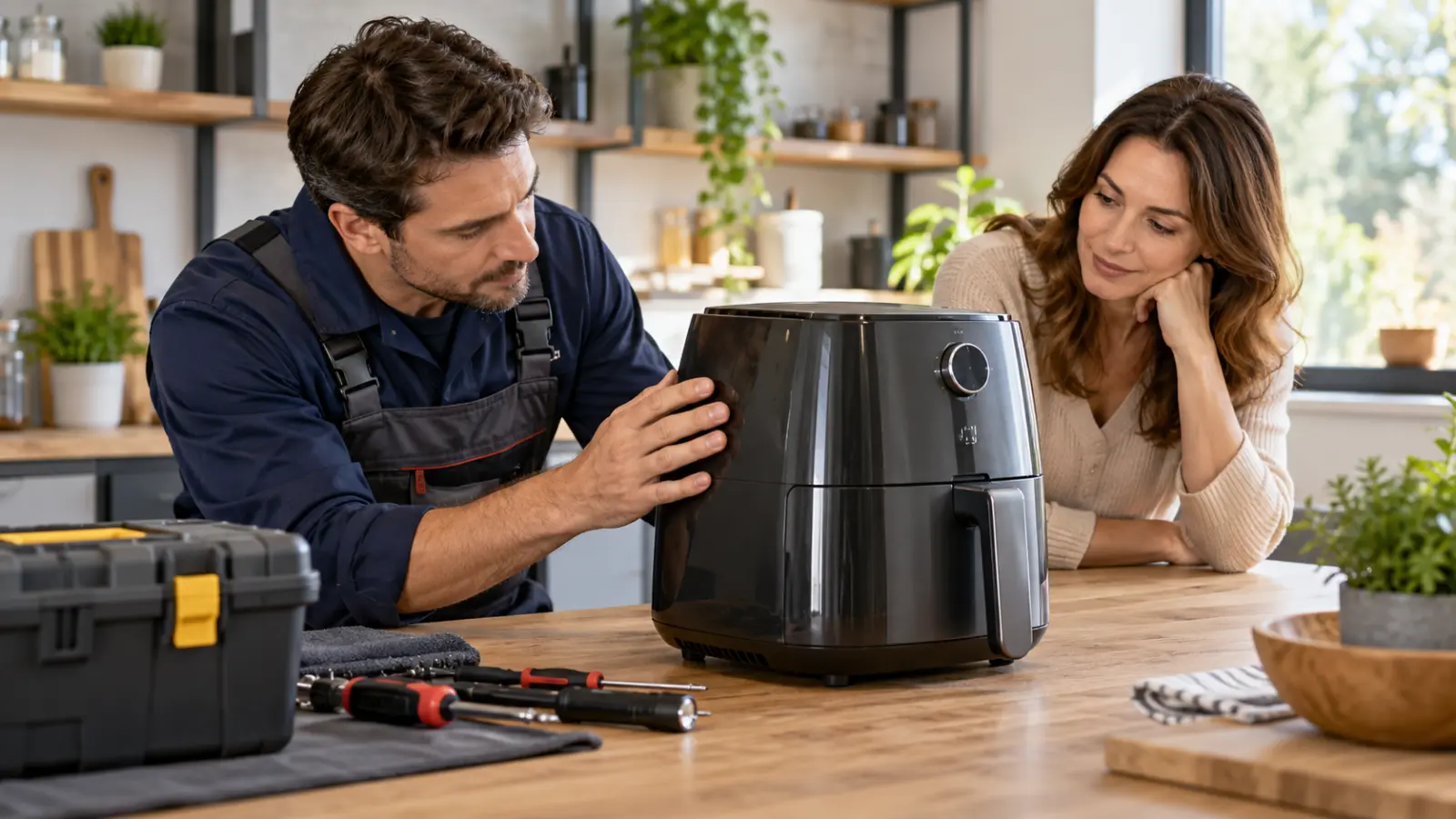
Repair or replace: prepare the right questions
A broken item creates pressure to act quickly, especially when you use it every day. Yet a symptom is not a diagnosis, and the price of a replacement is not the whole decision. Prepare a short set of information before asking a repair professional for advice.
Describe the problem without guessing the cause
Record the model, approximate purchase date and what you observed. Explain when the problem occurs and whether anything changed just beforehand. A photograph of the model label may be more useful than a confident guess about an internal component.
Follow the manufacturer's safety instructions. Stop using an item that appears unsafe and do not open electrical, gas or other hazardous equipment to investigate. This preparation is about communicating with a qualified repairer, not performing a repair yourself.
Ask what the diagnosis will establish
Right to Repair Europe notes the case-specific nature of repair diagnosis. Ask what the assessment covers, whether it has a charge and what information you will receive afterwards. Clarify whether the repairer can identify a likely cause or must carry out further examination.
Request an explanation of the proposed work, relevant parts availability and any important uncertainty. A vague assurance that the item should be fine is less useful than knowing what would be repaired and what remains outside that assessment.
Compare complete options
For repair, consider the quoted work, collection or travel, expected time without the item and any follow-up arrangement. For replacement, include delivery, installation where needed, compatibility and responsible handling of the old item. Use current quotes rather than a fixed percentage rule.
Consider whether the existing item still meets your needs. A repaired product that suits its task may be useful; an unsuitable product does not become suitable simply because the repair is possible. Equally, a new model's extra features matter only if you need them.
Make the uncertainty explicit
Write down what is known, what is estimated and what would change your choice. Ask how additional faults discovered during work would be communicated before costs increase. Check any applicable guarantee or service terms with the relevant provider.
The aim is a decision you can explain, not a rule that repair or replacement always wins. Keep the assessment and the agreed next step together so that urgency does not replace understanding.
Sources: Right to Repair Europe: Frequently Asked Questions.