
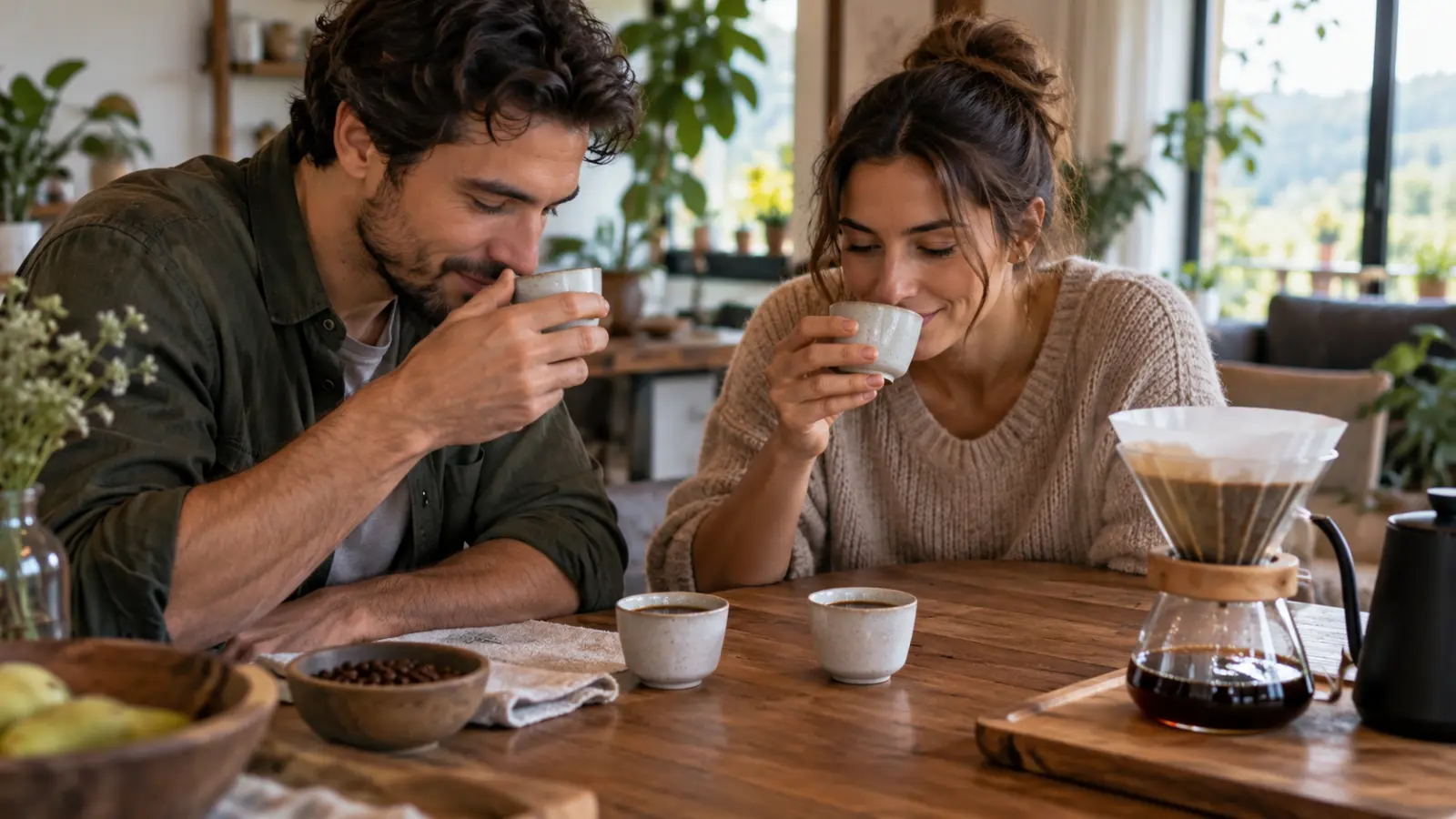
Prepare a small coffee tasting at home
A home coffee tasting can be an enjoyable comparison without specialist scoring sheets or a room full of equipment. Keep the group small and compare only a few coffees. The aim is to notice differences and discover what you enjoy, not to announce an objective winner or imitate a professional qualification.
Choose a question for the tasting
Decide what you want to compare. Two coffees brewed with your normal method may be enough for a first session. If you change beans, brewing method and serving style together, it becomes harder to understand what produced the difference.
Write down the information you already have about each coffee, such as the roaster's description and roast date. Keep promotional language separate from your own observations. Do not assume a higher price or a familiar origin determines what the group should prefer.
Keep the preparation consistent
Use the same suitable brewing method, measured amounts and water for each sample, following the equipment's instructions. Prepare cups that do not add strong smells and make the sequence easy to track. If brewing one after another, note the timing so you understand differences in serving temperature.
Handle hot water and equipment carefully. Let each sample cool to a comfortable tasting temperature instead of rushing into a comparison while it is too hot. Offer small servings and an option not to taste; nobody needs to finish every cup.
Describe before discussing preference
The Specialty Coffee Association separates descriptive sensory assessment from preference in its professional framework. Borrow the distinction, not the full protocol, for your informal session. First ask what each person notices in aroma, flavour, texture and finish. Then ask which cup they would choose to drink.
- Does one sample seem lighter or fuller in texture?
- Which impression is easiest for you to describe?
- Does your description change as the coffee cools?
- Are you noticing a difference or following someone else's words?
Give everyone a quiet moment to write before discussing. Plain descriptions are useful. “This feels lighter to me” is a valid observation; there is no need to invent an elaborate tasting note to participate.
Keep a record you will actually use
Reveal the coffees if you used simple anonymous labels, compare notes and mark personal preferences without ranking the people tasting. Note the preparation details alongside the result. A preference may change with another brewing method, so do not turn one session into a universal judgement.
For the next tasting, change one element deliberately. A short, repeatable comparison can teach you more about your own coffee choices than a complicated event whose details nobody remembers.
Sources: Specialty Coffee Association: Coffee Value Assessment.