
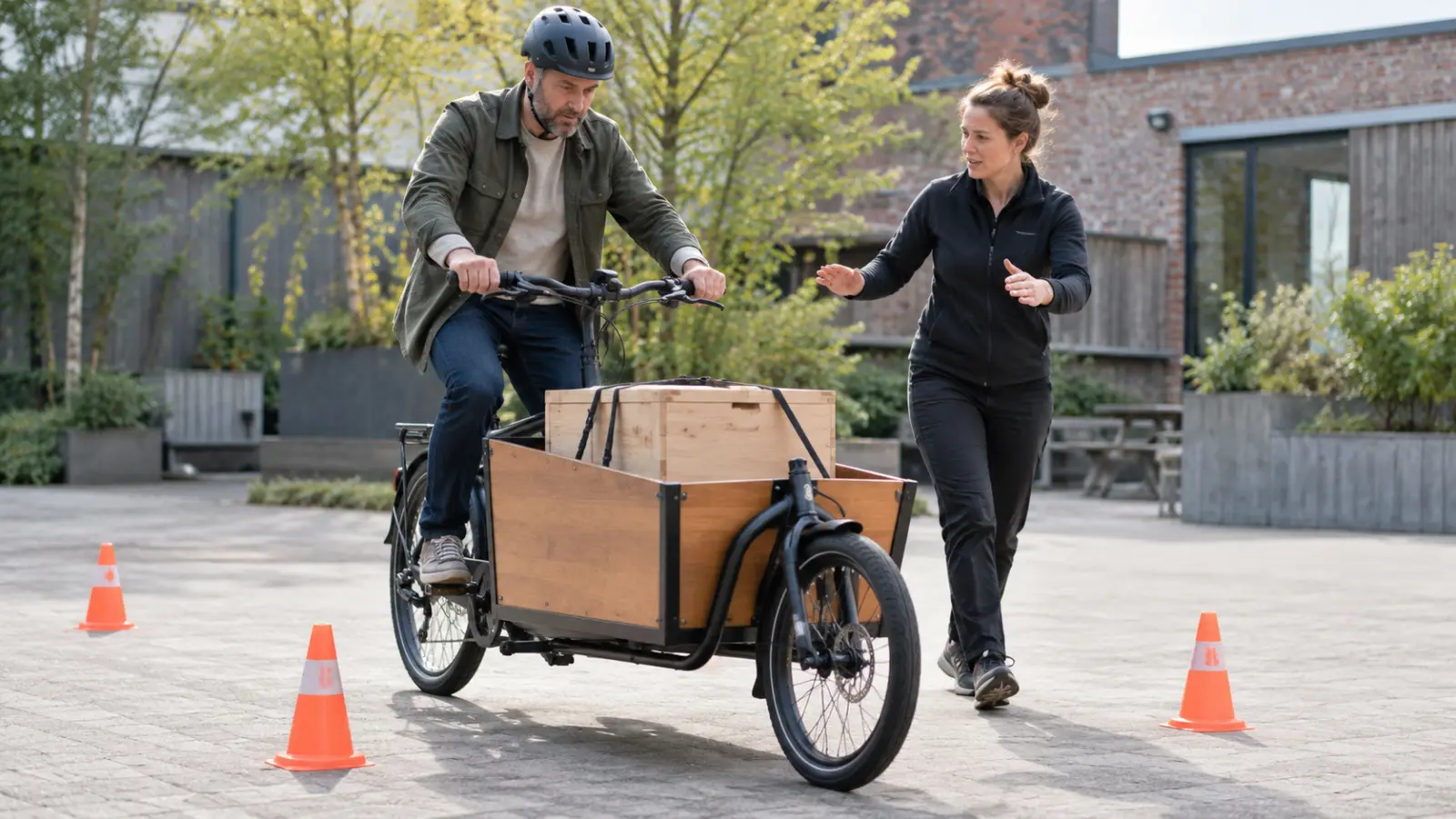
Test a cargo bike against a real day’s tasks
A cargo bike can look practical outside a shop and still be awkward at your own front door. A useful trial follows the tasks you want it to replace. Plan a small set of observations so you can distinguish unfamiliar handling, which may improve with instruction, from a genuine mismatch with your route or storage.
Define the load before the model
Describe the people or goods you intend to carry, how often and over which distances. Keep very different tasks separate. Delivering boxes, carrying children and taking an adult passenger each place their own demands on the vehicle and its approved equipment.
Ask the supplier to explain the manufacturer's load limits and how rider, bicycle, passengers and cargo count towards them. Check the requirements for passenger seats and restraints and the local rules. Do not treat a large box as permission to transport anything that fits inside it.
Agree a progressive trial
Start in an appropriate traffic-free area with instruction from someone familiar with the bike. Learn the controls, support stand and safe loading procedure before introducing a representative load. Use an agreed secure test load rather than making a passenger part of your first unfamiliar manoeuvre.
Practise starting, stopping and turning within your ability and the supplier's instructions. If handling feels difficult, ask for guidance rather than trying to overcome it through speed. Record what changed when loaded and what still needs practice.
Bring the trial home
If a rental or longer demonstration is available, test the actual access and parking arrangement. Measure gates and turns before attempting them. Think about the whole storage routine, including locks, cover, battery handling if relevant and the space left for other users.
Then try one realistic errand without a deadline. Observe where loading takes place, whether you can secure the bike at the destination and how long the complete trip takes. A route that works on an empty bicycle may need a different approach with a wider or longer vehicle.
Review the complete arrangement
- Does the approved carrying setup match your ordinary load?
- Can every intended rider manage the bike?
- Are service and replacement parts accessible?
- What will you do when the bike is unavailable?
Add required accessories and maintenance to the ownership budget. Note any tasks that remain better served by another option instead of forcing the bike to solve everything. The purpose of the trial is a clear decision: proceed, try a different layout or keep the current arrangement. Each is a better result than an expensive purchase based only on an appealing demonstration.
Sources: Cycling UK: Guide to cargo bikes.