
From delivery to service: how a restaurant connects work
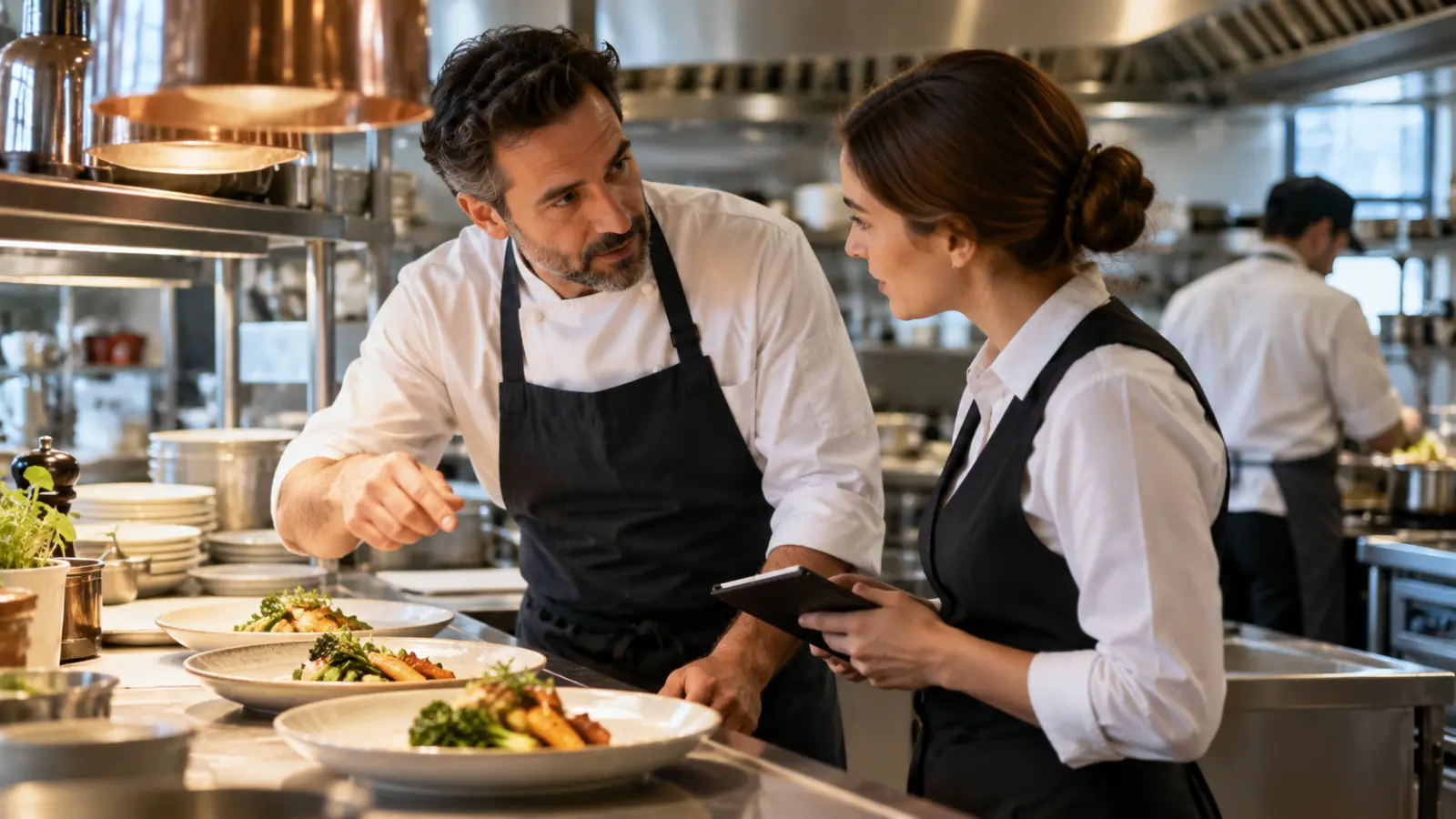
A restaurant meal is the visible end of several connected tasks. Purchasing, preparation and service depend on information being passed between people at the right moment. This is a general illustration of those handovers, not a report from a particular kitchen or a claim that every restaurant operates in the same way.
The menu becomes a practical demand
A proposed dish has to be translated into ingredients, equipment, preparation and service effort. In an illustrative small restaurant, a team planning a new vegetable dish might ask which elements can be prepared beforehand and which must be finished to order. The recipe alone does not answer who does what during a busy service.
Expected covers and confirmed bookings inform planning, while actual demand remains uncertain. A workable process makes that uncertainty visible instead of pretending the order list is an exact forecast. Changes need a responsible decision-maker, not a last-minute assumption by whoever notices them first.
Receiving creates the next handover
Ingredients arriving at the premises need to enter the restaurant's established receiving and storage process. The Food Standards Agency's catering pack includes supplier and stock-control guidance among its management tools. The exact procedures must fit the business and the relevant local requirements.
For understanding the workflow, focus on the information passed forward: what arrived, what is unavailable and what requires attention. If an ordered ingredient is replaced, that change may affect more than the cook's immediate task. The person responsible needs to review the consequences before the new item enters the service plan.
Preparation and service share one current picture
Imagine that a dish becomes unavailable halfway through an evening. A kitchen note is insufficient if the front-of-house team continues selling it. Conversely, a guest's confirmed request is ineffective if it never reaches the people preparing the meal. The handover needs acknowledgement, not just transmission.
- Who confirms the current dish and ingredient information?
- How are availability changes communicated to the dining room?
- Who handles a question that staff cannot answer confidently?
- How does the team distinguish a confirmed request from an assumption?
These are coordination questions, not instructions for improvising food-safety decisions.
The end of service feeds the next day
After the last order, useful observations can inform the next preparation cycle: what ran short, what caused waiting and where communication failed. The goal is a specific adjustment rather than blame. A well-connected workflow helps explain why a clear answer from a server may require a check with the kitchen, and why a small change to an order can involve several people behind the scenes.
Sources: Food Standards Agency: Safer food, better business for caterers.