
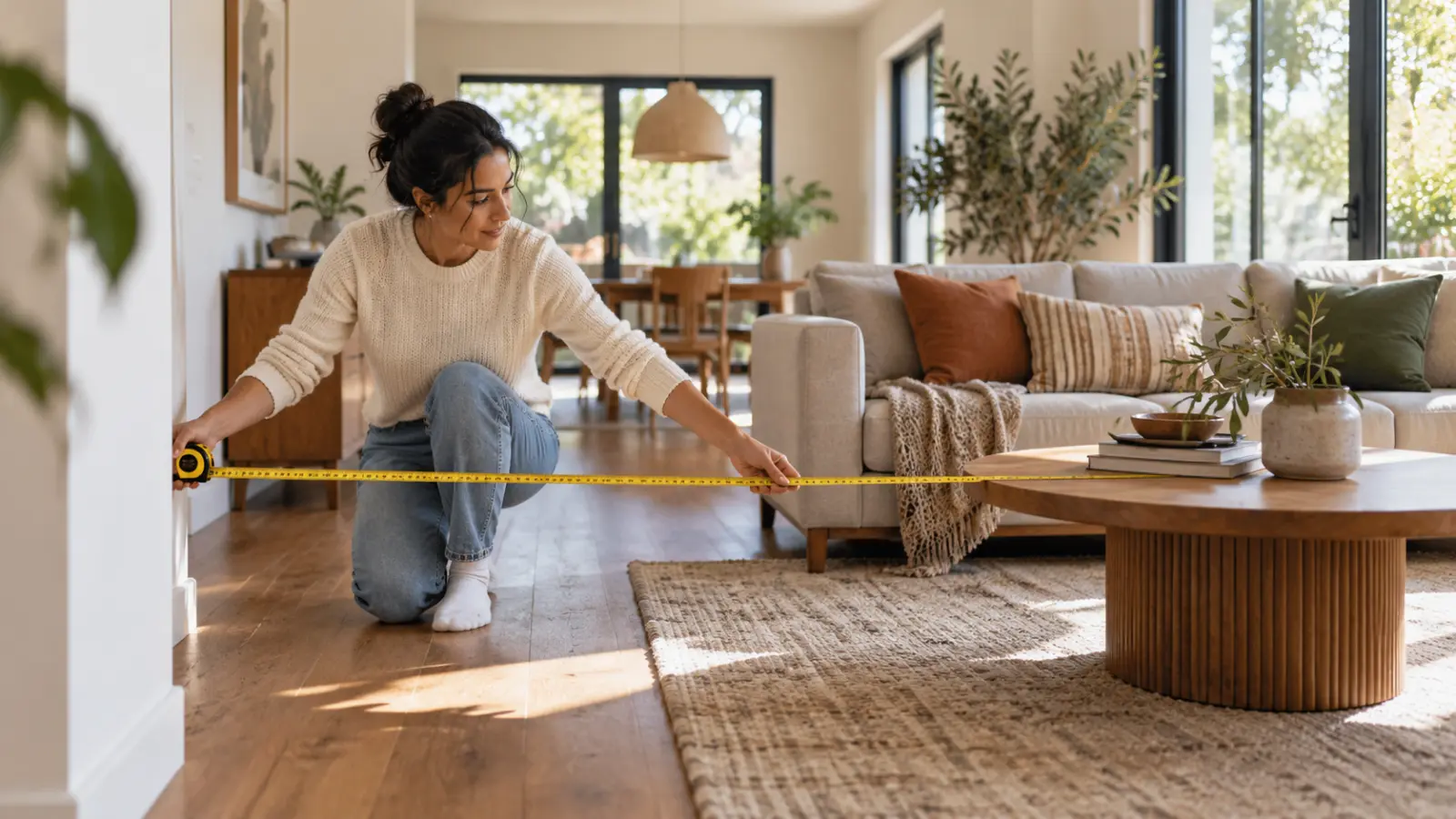
Choose furniture that fits the room and its routes
A sofa can fit between two walls and still make the room difficult to use. Furniture occupies more than its catalogue footprint: people sit, stand, open doors and carry objects past it. Before ordering, compare the whole activity around a piece with the space available. This check often prevents a more expensive attempt to fix the layout later.
Measure the fixed conditions
Record the room’s usable dimensions, not just its longest wall. Include openings, radiators, sockets, sloping ceilings and other restrictions. Note which measurements are certain and which need checking. A quick sketch with clear dimensions can be more reliable than memory or a wide-angle photograph.
List the furniture you intend to retain. Choosing each new piece in isolation can leave a room full of individually suitable objects that do not work together.
Include the space for use
IKEA’s dining-table guidance emphasises room for chairs and comfortable movement around the table. Extend that practical question to other furniture: can drawers open, can someone stand from the sofa and can the door still swing without hitting anything?
In a fictional living room, a slightly shorter sofa might leave a usable route to the window while a deeper model consumes it. Compare what the extra size gives you with what it removes. Bigger is not automatically more comfortable in everyday use.
Try the footprint at home
Mark dimensions with a suitable removable material or arrange existing objects as a temporary boundary. Walk through the main routes carrying a laundry basket or bag. Test the room with chairs pulled out and furniture in its extended position where relevant.
Consider household members with different mobility, reach and seating needs. Generic spacing suggestions are a starting point, not a substitute for checking what the actual users require. Ask a specialist when accessibility needs are more complex.
Check the journey into the room
Measure delivery access, lifts, stairs and awkward corners. Confirm packaging dimensions and any assembly or fixing requirements with the supplier. A piece that fits the final position may still be impossible to bring there safely.
Keep your chosen dimensions and assumptions with the order details. If one remains uncertain, resolve it before purchasing. A successful choice balances the object you like with the room you need to move through every day.
Check the arrangement with the room in its busiest normal state, not only when everything is put away. A plan that works with closed drawers and empty seats may feel very different during an ordinary family evening.
Sources: IKEA: Your guide to choosing the perfect dining table.