
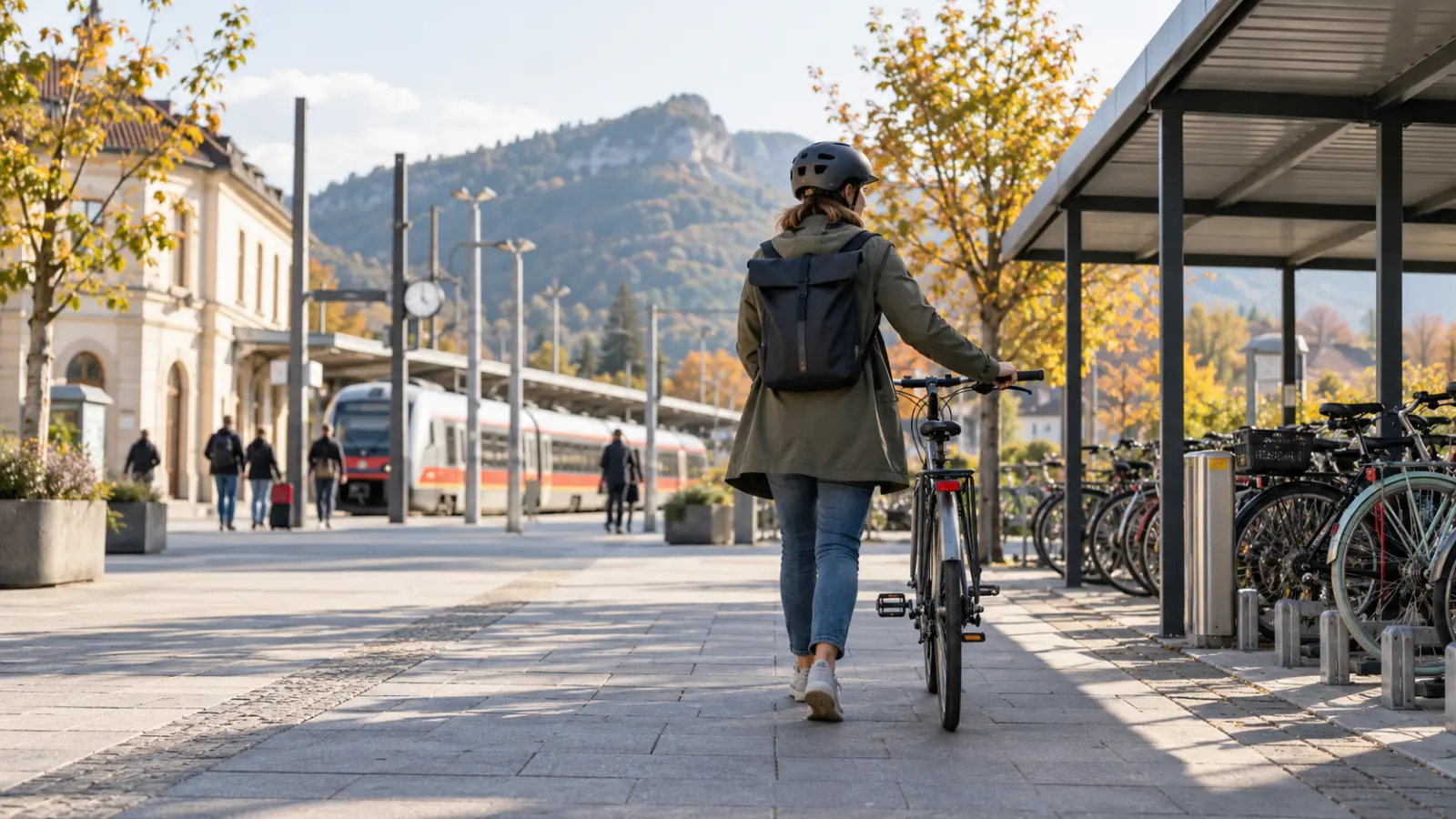
Combine cycling and rail without a rushed transfer
Combining a bicycle with a train can solve the first or final part of a commute, but the transfer deserves its own plan. Begin by deciding what the bike needs to do. You may need it only between home and the station, only at the destination or at both ends. Each arrangement creates a different daily routine.
Compare the complete options
Sketch three possibilities: leave the bicycle at the departure station, take it on the train, or use a separate option at the destination. Add walking, local transport or an available rental arrangement where relevant. Compare door-to-door time and practical constraints, not just the length of the rail journey.
For a bicycle left at the station, inspect the actual parking area. Check access, opening arrangements, payment where relevant and the route from the rack to the platform. For a destination bike or rental, confirm availability rather than assuming one will be waiting every morning.
Check carriage on the actual service
SBB's bicycle information distinguishes transport arrangements and the relevant ticket and reservation requirements. Check the current rules for your exact train and bicycle type before relying on carriage. Repeat the check for the return journey; a workable morning service does not establish that the evening train has the same conditions.
Do not assume that a bicycle ticket guarantees a usable space in every circumstance. Where reservations or other conditions apply, make the required arrangements and read the operator's instructions. Check other operators separately on a multi-part trip.
Try the transfer while unhurried
Walk the route through the station with the bike on a trial day. Follow station rules and use the permitted access routes. Check stairs, lifts, narrow passages and the distance to the boarding area. Do not practise unfamiliar lifting or loading in a crowded rush-hour situation.
Travel with the bag you normally carry. A setup that leaves both hands occupied may be inconvenient where you must also manage doors, tickets and the bicycle. Ask for assistance or advice where the transfer exceeds what you can safely manage.
Give the routine a backup
- Where will the bike remain if carriage is unavailable?
- Can you make the last part of the trip another way?
- What happens if the bicycle needs a repair?
- How much transfer time works for you in practice?
After several trial journeys, review the repeated friction points. A different parking position or a slightly earlier connection may matter more than a faster bicycle. Choose the arrangement that works reliably for your normal week, with a clear alternative for the days it does not.
Sources: SBB: Travelling with bicycles; SBB: Carriage of bikes on trains.