
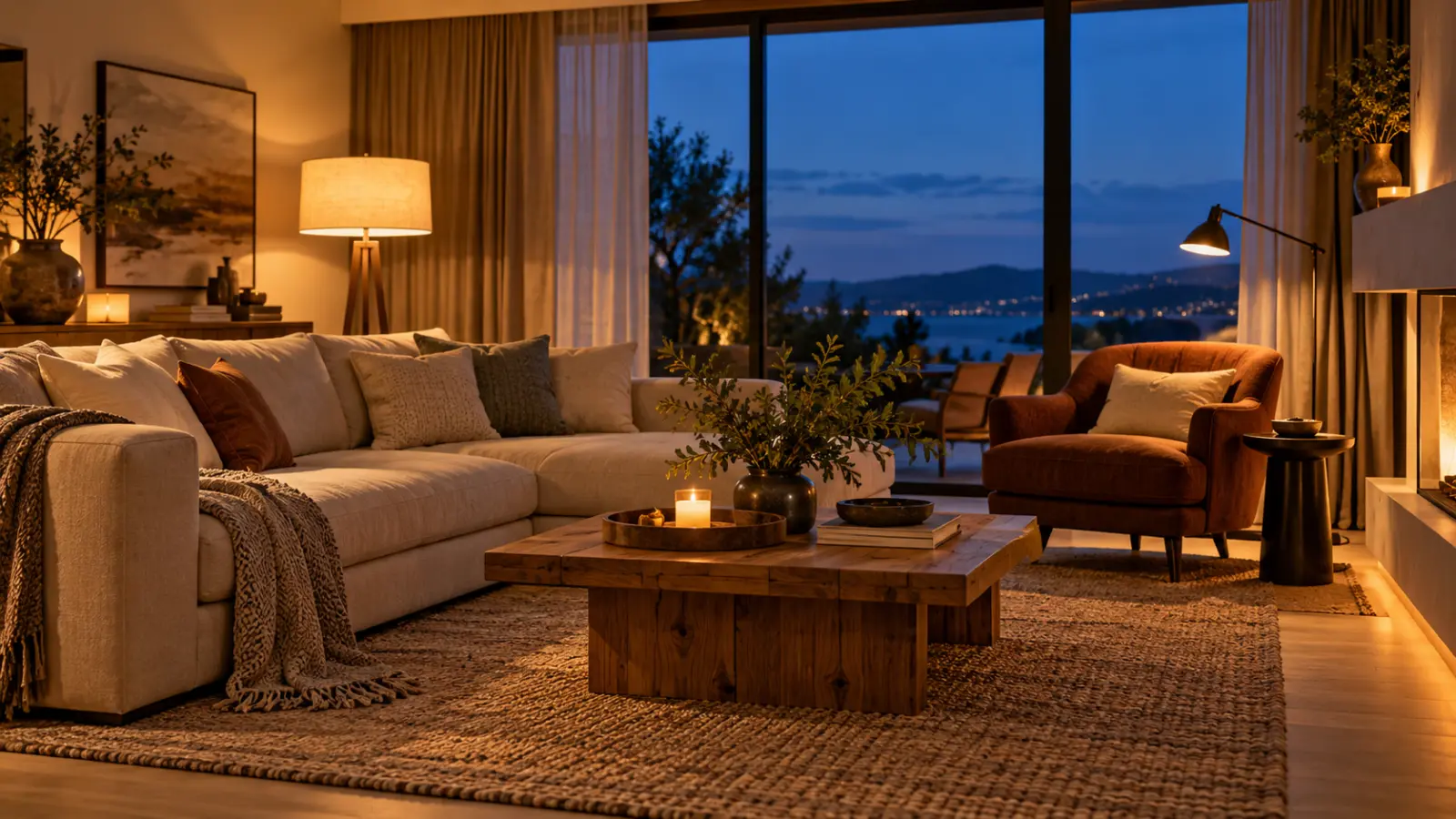
Plan lighting around how you use a room
A room can look bright and still be awkward to use. The dining table may be well lit while a reading corner remains dark, or a ceiling light may reflect directly in a screen. Plan around the activities in the room before choosing a decorative fixture.
Mark the places where light matters
Sketch the room and mark where you read, prepare food, work, talk and move through the space. Add the windows, existing outlets and any fixed lighting. Walk through the room in daylight and after dark. Note where you strain to see a task or find the light uncomfortable.
Choose the first problem you want to solve. Moving a reading lamp may help more than replacing every ceiling fitting. If furniture is likely to move, a flexible lamp can be easier to adapt than another fixed point.
Give different lights different jobs
As an editorial planning method, separate general light for moving around, focused light for an activity and optional light that highlights a shelf or wall. You do not need an individual fixture for every category. The aim is to avoid asking one light to do incompatible jobs.
Place a task lamp so your head or hand does not block the light from the work. Try the position while actually reading or writing. Check the view from nearby seats as well: a useful desk lamp should not shine directly into another person's eyes.
Compare brightness and appearance
Lumens describe light output, while watts describe electrical power. Color temperature describes the appearance of light: lower Kelvin values appear warmer and higher values cooler.
Use those distinctions when comparing products, but assess the result in the room. A shade, beam angle and nearby surfaces affect how the light feels. Avoid buying several different bulbs based on a label alone when you can test one first.
Check glare, reflections and controls
Sit where you normally sit and look toward the fixture, the television and any glossy surfaces. Try changing the direction of the light or using a shade rather than simply reducing brightness everywhere.
If dimming matters, check that the lamp, bulb and dimmer are compatible. Keep controls easy to reach. A useful evening setup should not require walking through a dark room to switch on the light you need.
Test before making permanent changes
Try the existing lamps in different positions.
Test one activity at a time after dark.
Compare the view from all regularly used seats.
Check the controls and the route through the room.
Write a short specification before buying additional fixtures.
For changes to fixed wiring or lighting in demanding locations, use a qualified installer and the applicable local requirements. A room sketch cannot establish electrical suitability.
Sources: US Department of Energy: Consumer Guide to Energy-Efficient Lighting (2021).