
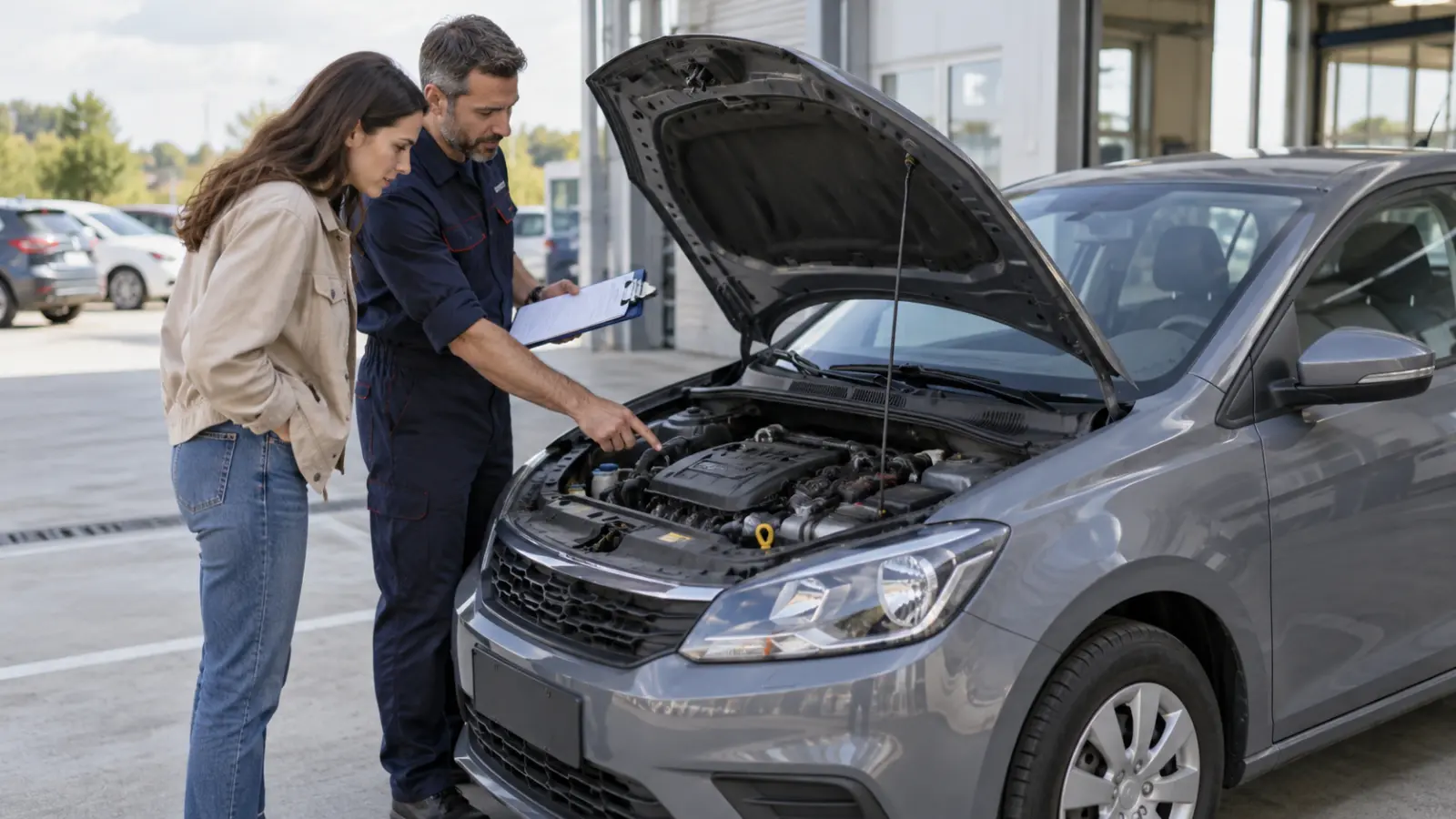
Prepare for a used-car viewing and test drive
A used-car viewing is easier to manage when it has a clear sequence. Your aim is not to become a mechanic in an afternoon. It is to check whether the seller's description, the available records and your own observations fit together, then identify what still needs a professional assessment.
Ask for the basics before travelling
Request the exact model, registration details, mileage, service records and a description of known damage or outstanding work. Ask which documents you may inspect at the appointment and whether an independent pre-purchase inspection is possible. A reluctance to answer a question is a reason to clarify it, not proof of a particular defect.
Keep the advertisement and your written questions together. Separate what the seller has confirmed from what you have assumed. If a feature matters to you, such as a particular driver-assistance function, ask for confirmation against the actual vehicle rather than relying on a model's general equipment list.
Give the appointment a practical order
Choose daylight where possible and leave enough time to avoid a rushed decision. Start by matching the vehicle and records. Then look at the interior, exterior, luggage space and supplied equipment. Photograph anything you want to discuss, with permission. Do not crawl under an unsupported vehicle or attempt unfamiliar mechanical checks.
Bring a simple note sheet with three columns: observation, seller's explanation and follow-up. For example, an irregular service interval belongs on the sheet until you understand it. An explanation may be reasonable, but it should not disappear from your decision merely because the conversation moved on.
Agree the test drive in advance
Confirm permission to drive, relevant licence requirements and the arrangements for insurance and any excess. Choose a lawful route with a useful mix of conditions. Keep your attention on driving; ask a companion to record observations if necessary.
- Can you find a comfortable driving position and see adequately?
- Do controls and equipment operate as described?
- Are there noises or warning messages you need explained?
- Does the vehicle handle your normal parking and loading tasks?
A test drive cannot establish every aspect of mechanical condition. Refer unexplained behaviour to an independent professional rather than guessing its cause.
Decide after the unresolved points are answered
Review the notes away from sales pressure. List promised work, supplied items and any conditions that matter to the purchase. Ask for these to be recorded clearly in the proposed agreement. If the remaining uncertainty exceeds your knowledge or budget, arrange an inspection or continue your search. Walking away from an unclear purchase is a valid outcome of good preparation.
Sources: TCS: Kauf eines Occasion-Autos – die 10 grössten Irrtümer.