
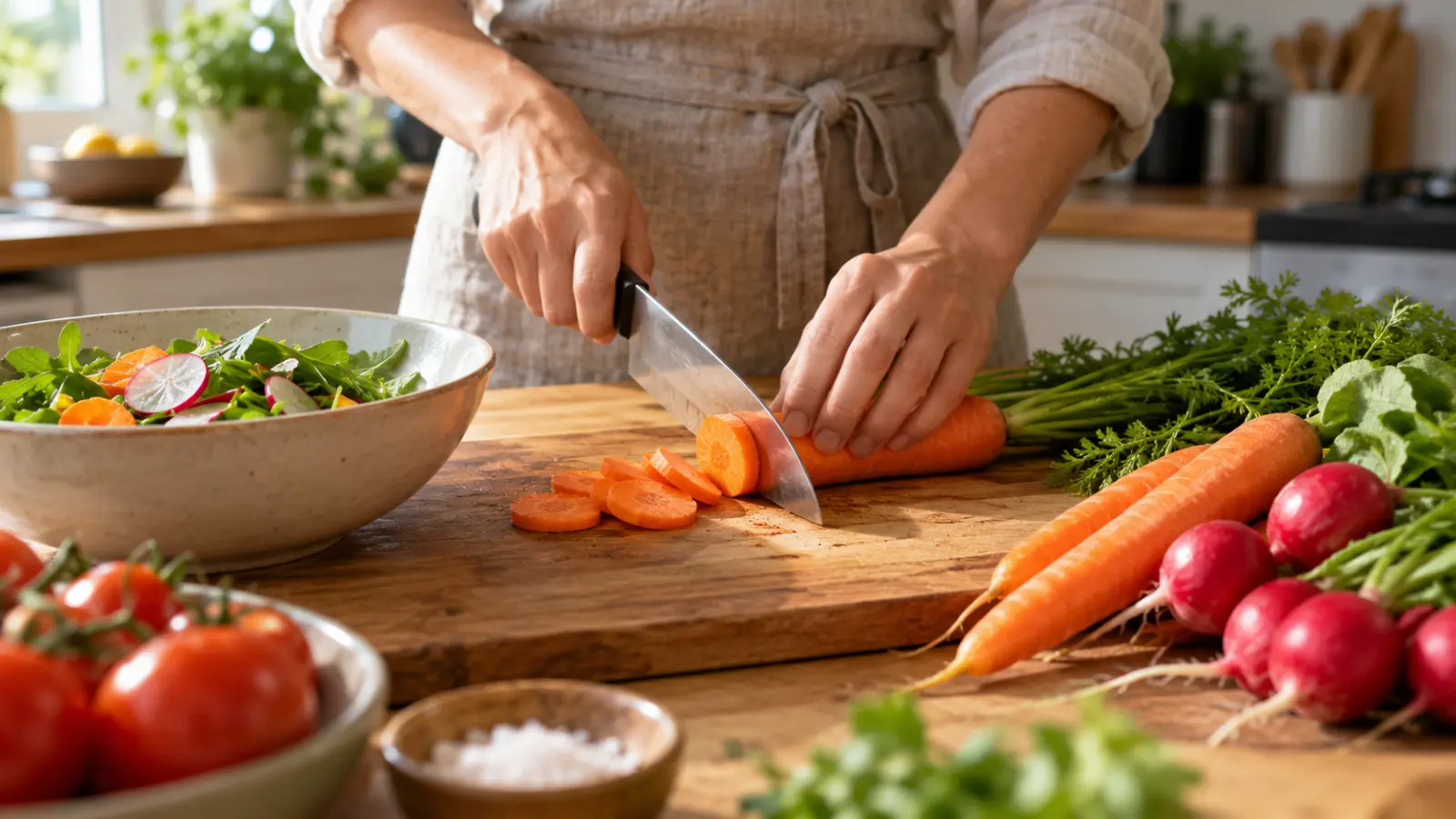
Bring seasonal ingredients into everyday cooking
Cooking with seasonal ingredients becomes easier when you adapt familiar meals instead of collecting a new recipe for every vegetable. Start with one or two ingredients you can buy in a useful quantity, then give them a clear role in the meals you already know how to make.
Use the calendar as a starting question
Check a seasonal guide for the region where you shop. WWF Switzerland's fruit and vegetable guide is one example. A calendar helps you ask what is available now, but the individual product's origin and growing conditions still deserve attention. Do not assume everything on the same display has the same background.
At a market or shop, ask a focused question: where was this grown, how should it be stored and when is it likely to be at its best? You do not need an exhaustive investigation before every purchase. You need enough information to choose an ingredient you can use well.
Keep the cooking method familiar
Choose a meal structure you understand, such as a tray of roasted vegetables, a soup, a grain dish or a simple tart. Then consider a seasonal ingredient suited to that method. Check a reliable recipe for an unfamiliar ingredient rather than assuming all vegetables cook at the same speed or can be substituted without adjustment.
Change one main element at a time. If both the ingredient and the method are new, leave more time for preparation. An ordinary evening is not always the best place to test several unknowns at once.
Buy for a specific use
- Which meal will use the ingredient first?
- What preparation does it need?
- Is the amount realistic for your household?
- What is the plan if the meal moves to another day?
Keep any necessary storage guidance with the purchase. A large attractive bundle is not useful if you do not have space or a way to prepare it. Consider buying a smaller amount to learn with before making it a weekly habit.
Create a small seasonal repertoire
After cooking, note what worked: the cut, method, accompaniment and effort. Keep a short list of combinations you would make again. Over time, that list becomes more useful than a long collection of recipes you have never tried.
Seasonal cooking does not have to exclude every familiar staple or ingredient from elsewhere. It can simply give your ordinary meals a changing focal point. The useful measure is whether you chose deliberately, handled the food appropriately and enjoyed a dish you can realistically repeat.
Sources: WWF Switzerland: Ratgeber Früchte und Gemüse.